


How Association House Staff Leveled Up Their Skills in 2026

The best investment we can make in our community is investing in the people who serve it.
Every year, Association House staff participate in professional development opportunities that help them sharpen their skills, deepen their expertise and grow as leaders. This year, that commitment led to some remarkable milestones, from advanced clinical licenses to specialized counseling certifications that are already making an impact for participants.
For Behavioral Health Supervisor Mary, professional development has been part of a much longer journey—one that began long before she joined the staff.
A participant at Association House before becoming an employee nearly nine years ago, Mary continued pursuing higher education while working full time. She earned her associate's degree, bachelor's degree and master's degree in social work before completing nearly two years of clinical supervision and passing the Licensed Clinical Social Worker (LCSW) exam on her very first attempt.

Maintaining a 4.0 GPA throughout graduate school wasn't easy, but Mary says one advantage was already having years of real-world experience working with participants.
"I was already doing the work," she said. "I had the experiential knowledge, I had the practical employment knowledge, and then I got the educational knowledge."
Today, Mary's LCSW allows her to practice independently, review and approve clinical documentation, and begin building a private therapy practice alongside her work at Association House. But even with those new responsibilities, she continues seeking supervision and learning from colleagues—a reflection of the growth mindset that's guided her career from the very beginning.
Her story has come full circle. After first walking through Association House's doors as a participant, she now helps lead the very kind of care that once supported her own recovery—proof that investing in staff growth doesn't just strengthen careers; it creates leaders who understand firsthand the impact compassionate services can have.
That same commitment to growth and service inspired Visions Coordinator and Counselor Lawrence to pursue his Certified Alcohol and Drug Counselor (CADC) credential this year.
Lawrence brings something especially meaningful to his role: lived experience. Now nearly two decades into his own recovery journey, he knows firsthand the courage it takes for participants to walk through the doors of the Visions Substance Use Disorder Program.
"Eighteen years ago, I made a conscious decision to say, 'In order for me to change my life, I have to change the way I think,'" Lawrence said.
Lawrence is a source of inspiration for the substance use recovery participants he serves.
Recovery transformed the course of his life. After becoming active in the recovery community and volunteering for four years at Association House, he eventually joined the organization as a staff member. Today, he helps participants navigate substance use treatment through a harm reduction approach rooted in empathy rather than judgment.
Earning his CADC strengthened the work he was already passionate about, giving him another tool to support participants as they work toward recovery. But for Lawrence, credentials have never been the ultimate goal.
"I don't want to be part of a system that just shuffles people through because of paperwork," he said. "I need to be able to make a difference, but I need to also see the difference that I'm making."
Those moments come in many forms: a participant rebuilding relationships with family, maintaining sobriety, finding stable housing, or simply beginning to believe that a different future is possible.
"When you see the gleam in their eyes, when you hear the sincerity in their voice, that's when you know something has changed," Lawrence said.
Having broken a multigenerational cycle of addiction in his own family, Lawrence understands that every participant's success has a ripple effect far beyond the individual.
"There is life within recovery," he said.
Like Lawrence, Behavioral Health Counselor Jacqueline earned her CADC while serving participants in the Visions program, where she combines clinical expertise with a deeply person-centered approach to care.
Although Jacqueline had long planned to become a therapist, substance use counseling wasn't originally the path she expected to take. While in graduate school, she entered the field through a specialized program and quickly realized she'd found her calling.
"I almost fell into it, but ended up being really passionate about that specialization," she said. "I realized I have a lot of personal experience with it, and it's a lot more prevalent than people even realize. I think it's important to bring awareness to it."
Jacqueline leads group substance use counseling in our Visions program.
While studying for the CADC exam, Jacqueline was simultaneously putting those lessons into practice with Visions participants every day—a combination she says made both her work and her certification stronger.
Today, her master's degree in counseling psychology and CADC credential allow her to approach participants from both a mental health and substance use perspective. She says those two disciplines are inseparable.
"It's not one or the other—they work together," Jacqueline said. "Having both perspectives allows me to view each person more holistically."
That philosophy shapes everything from the groups she facilitates to one-on-one counseling sessions. One lesson has stayed with her throughout her education: "Focusing on the person and meeting them where they're at," rather than trying to "fix" someone or decide what recovery should look like for them.
Working at Association House, she says, makes that person-centered approach even stronger.
"I think that's the best thing," Jacqueline said of the organization's holistic services. "People are able to explore resources for jobs, housing and continuing mental health care. It's a holistic program versus just focusing on substance use."
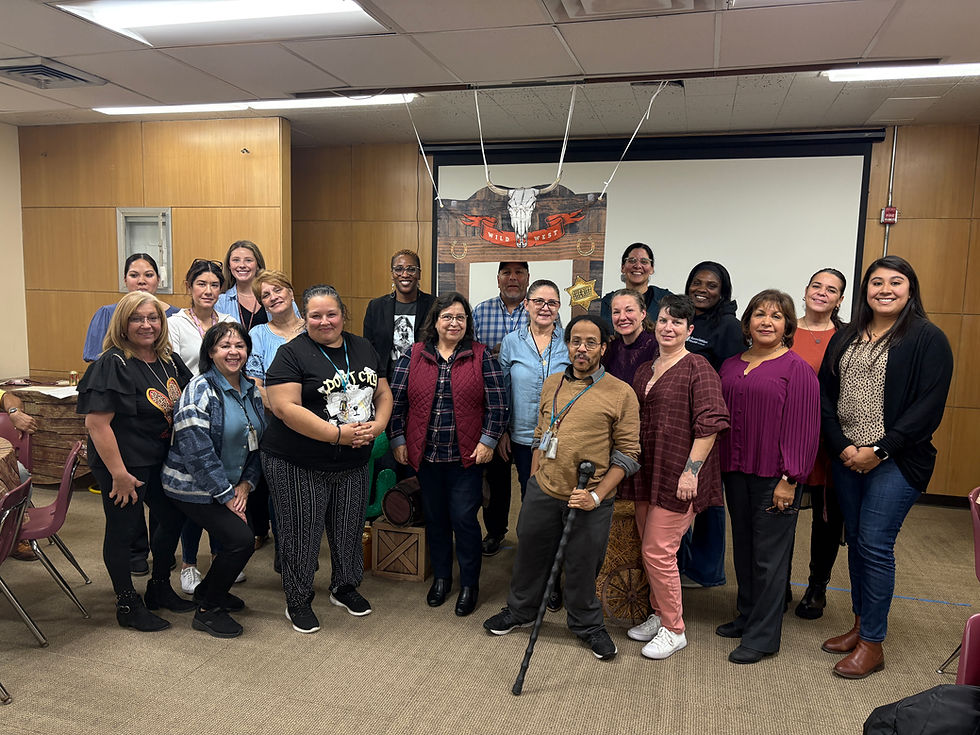
Whether it's achieving independent clinical licensure after years of dedication or earning specialized counseling credentials that deepen their impact with participants, each of these accomplishments reflects something bigger than individual milestones.
Professional development at Association House isn't just about checking a box or adding credentials after a name. It's about strengthening the people who strengthen our communities. Every certification earned, every new skill developed and every new perspective gained ultimately comes back to the participants who walk through our doors looking for opportunity, support and hope. ▪


Comments